From first gift to lasting support: using donor data from your CRM to guide the journey
Every supporter relationship develops differently.
Some donors make a single gift and disappear. Others gradually become more committed, while even long-standing supporters can begin to disengage without an obvious moment when the relationship changes. Most charities already capture the interactions that make up these journeys. The challenge is turning that information into a clear view of what is changing, which supporters need attention and what should happen next.
A CRM may hold the supporter record, but it does not always make it easy to uncover the story behind it. That is where a CRM marketing companion can make a difference.
Every donor journey leaves useful signals
A first donation is a valuable starting point. It can tell a charity when somebody first gave, how much they donated and which campaign or channel prompted their response.
What it cannot tell you on its own is what kind of supporter that person may become. That picture develops over time. A donor may give again sooner than expected, increase the value of their support or begin responding across different appeals. Another supporter may gradually leave longer gaps between interactions before eventually drifting away.
The Apteco and Wood for Trees webinar, Once upon a donor: The story hidden in the data explores this idea by following one donor journey from first gift through to loyalty or potential lapse.
The key message is simple: individual transactions matter, but the real value comes from understanding how the relationship is changing over time.
Look beyond the latest donation
Traditional fundraising reporting often focuses on outcomes. Which appeal performed best? How many donors responded? What was the average gift?
These measures remain important, but they mainly describe what has already happened. A richer view of supporter behaviour allows teams to ask more useful questions. How recently has somebody given compared with their normal pattern? Is their frequency increasing or declining? Are they responding across more types of activity? Is their relationship with the charity strengthening or beginning to lose momentum?
These signals help charities move beyond broad labels such as active, regular or lapsed and towards a more nuanced view of supporter behaviour. The value comes from spotting those changes early enough to act.
Please accept marketing cookies to view this video.
Add the missing layer between CRM data and fundraising action
Most charities do not need to replace the CRM systems they already rely on.
These platforms remain essential for maintaining supporter records and managing relationships. The gap often appears when fundraising or marketing teams want to analyse that data in greater depth.
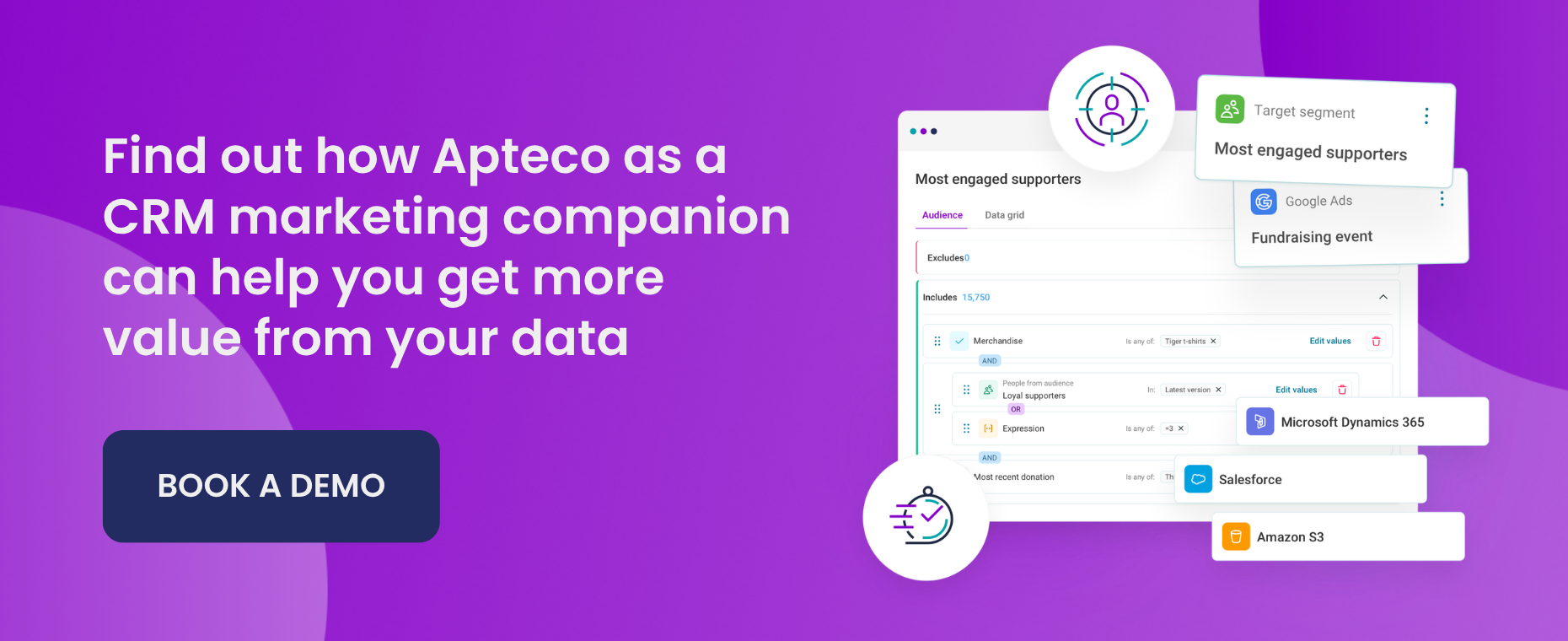
Apteco works alongside existing systems as a CRM marketing companion, giving teams an environment in which to explore supporter behaviour, create segments and turn insight into audiences that can be used in existing marketing processes.
That changes the questions teams can answer.
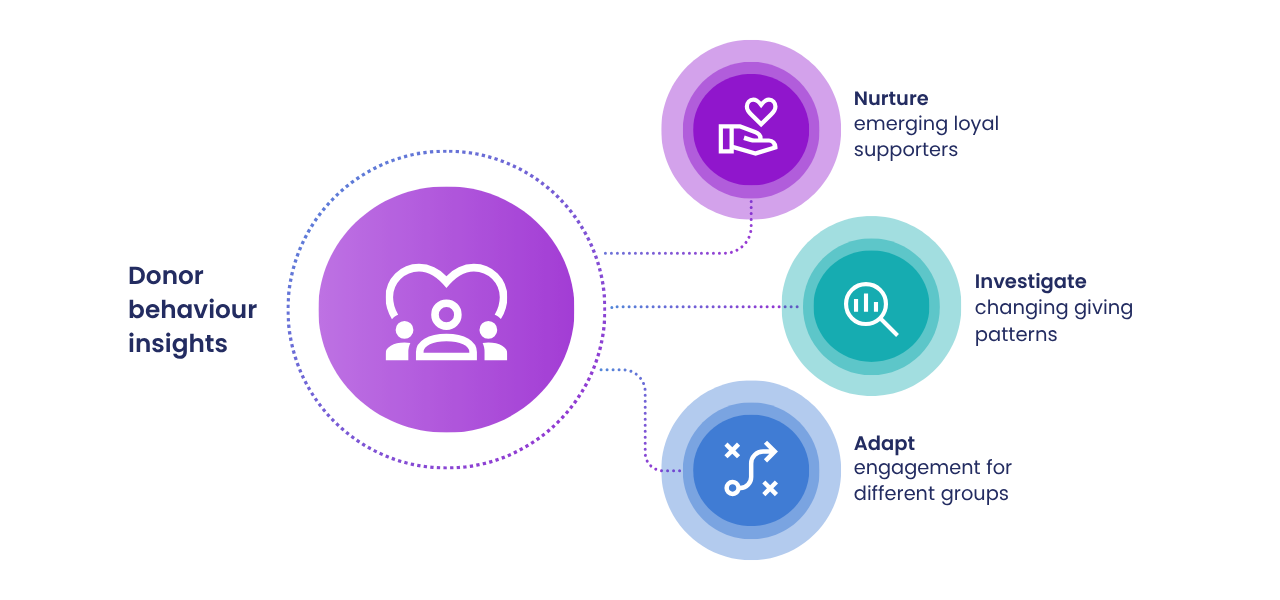
Instead of simply identifying everyone who responded to a campaign, they can explore which first-time donors are beginning to behave like loyal supporters, which established donors are changing their usual pattern or which groups may benefit from a different form of engagement.
Find the moments where intervention matters
One of the most valuable applications of supporter data is understanding the transition between different stages of the relationship.
A donor does not usually become loyal after one interaction, just as a long-standing supporter rarely becomes disengaged overnight. Both changes tend to develop through smaller behavioural signals. A first-time donor making a second contribution sooner than expected may be showing signs of growing commitment. Someone whose normal giving frequency starts to decline may warrant attention before they reach the point where they would traditionally be considered lapsed.
This is where analysing recency, frequency, value and engagement over time becomes particularly useful, allowing charities to identify movement in the relationship rather than waiting for a final outcome to appear in a report.
Make personalisation about relevance
Personalisation is often associated with producing more versions of a campaign.
The webinar points towards a broader idea: using what is known about the supporter to decide what type of interaction is most appropriate.
Two donors may look similar within the CRM but be on completely different journeys. One may be increasing their commitment. Another may historically have been valuable but is beginning to respond less frequently. Treating both in exactly the same way ignores what their behaviour is showing. Better insight allows fundraising teams to make more considered decisions. For one supporter, the next step may be another fundraising ask. For another, it could be stewardship, recognition or a different type of communication.
The aim is not to create a unique campaign for every donor. It is to make the next decision more relevant to the relationship.
Use supporter behaviour to look forward
Supporter data is often used retrospectively, but the patterns within it can also help charities think about what may happen next.
If certain behaviours are common among donors who become particularly loyal, teams can look for other supporters beginning to display similar characteristics. If declining frequency or engagement regularly appears before supporters lapse, those signals can help identify groups that may need attention earlier.
Instead of waiting until a donor has become inactive, a charity can look for changes in their established behaviour. Rather than assuming every new donor should follow the same journey, teams can use developing behaviour to shape what happens next.
Keep learning as the relationship develops
The supporter journey does not stop once an audience has been created or a campaign has been delivered.
Every subsequent interaction adds new information. That creates an opportunity to build a continuous learning cycle. Teams can identify an audience, take an action, observe what happens next and use that behaviour to improve the next decision.
Over time, charities become better able to recognise which behaviours signal growing loyalty, which interventions have the strongest impact and where relationships are most at risk in order to improve decisions.
Turn donor insight into the next best action
Every supporter interaction adds another piece to the story held within a charity’s data.
A CRM marketing companion helps fundraising and marketing teams bring those pieces together, understand how relationships are changing and translate that insight into more meaningful action.
The charity keeps the systems it already relies on. Teams gain greater freedom to investigate supporter behaviour, create more relevant audiences and recognise important changes before the opportunity to respond has passed.
Download the free eGuide, Convert your data into impact with a CRM marketing companion, to explore how Apteco can help turn existing supporter data into more relevant and actionable fundraising insight.